
Right now, the global commercial fleet sits at roughly 26,750 airplanes. If you fast-forward less than two decades to 2044, manufacturers expect that number to hit 50,000. That means the world is going to need more than 23,000 new passenger jets, not to mention thousands of replacements for the older models retiring from service.
When you consider the average price tag is around $100 million each, even after the usual heavy discounts, the scale of money changing hands is staggering. We are looking at approximately $1.5 trillion in airframes alone. That doesn’t even count the engines, avionics, or the massive maintenance contracts that keep them flying. This explains why the battle between manufacturers has never been quite this brutal.
The Duopoly Under Pressure
For half a century, this market has essentially been a two-horse race between Airbus and Boeing. As of late October 2025, Airbus had a backlog of 8,698 aircraft while Boeing sat at 6,534. Those numbers are set to grow even larger after the Dubai Air Show. Basically, both companies have about fifteen years of full production already sold out. But the landscape is shifting under their feet.
Boeing is still paying the price, both literally and figuratively, for a decade where financial engineering seemed to take priority over safety and actual engineering. The two fatal 737 MAX crashes didn’t just claim 346 lives; they triggered the longest grounding in aviation history. The damage to their reputation is still settling. In 2025 alone, Boeing was ordered to pay $28 million to the family of just one victim, with many more lawsuits pending. Their new CEO, Kelly Ortberg, is an engineer rather than a financier, and he has promised a cultural reset. But you can’t recover that kind of lost ground overnight.
Airbus, meanwhile, has pulled ahead decisively in the crucial single-aisle segment. They also enjoy a huge lead in modern widebodies. Their A350 has been in service since 2015. Compare that to Boeing’s competitor, the 777X, which remains uncertified and is approaching a fifteen-year delay. By the time the 777X finally enters service, it will face a rival that has already captured most of the replacement cycle for older long-haul fleets.
Engines: Where the Real Money Is Made
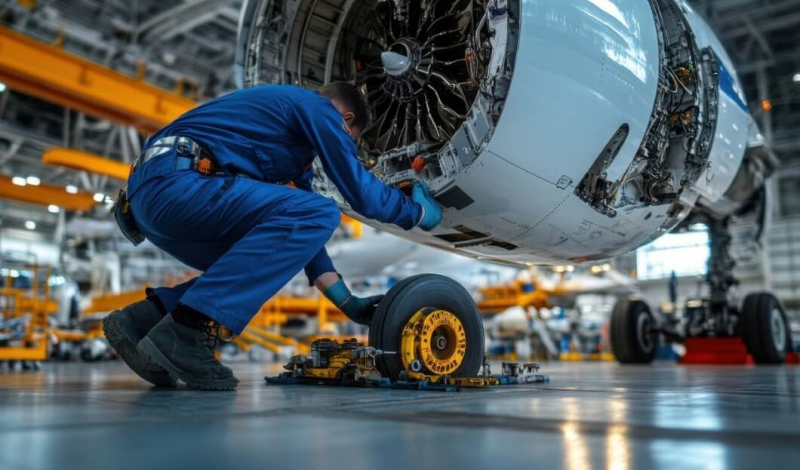
While the airframes get the headlines, the engines are where the profit margins actually live. The competition there is fierce.
A single big engine for the 777X can list for more than $40 million. That is sometimes more than the cost of an entire smaller jet. Long-term leasing contracts, often called “power by the hour,” have become the standard. Just keeping a standard engine on a commercial jet can cost an airline €200,000 per month per plane.
Three Western players dominate this space. You have Rolls-Royce, which specializes in the massive engines for the A350 and the upcoming 777X. Then there is GE Aviation, operating alone or through its massive partnership with Safran. Finally, Pratt & Whitney is pushing hard with its new technology on smaller jets like the A220.

Click here to preview your posts with PRO themes ››
The Challengers Are Ahead
If you look below the main duopoly, the picture is just as intense. Embraer has come out of the Covid crisis stronger than before with its new E2 family of jets. These planes are highly efficient and perfectly sized for the 80 to 150-seat market. The Brazilian manufacturer has effectively pushed out of the turboprop business to compete directly with the smallest Airbus jets and future offerings from China.
Meanwhile, ATR has secured what is basically a monopoly in modern regional turboprops now that Embraer has left that specific segment. And then there is China.
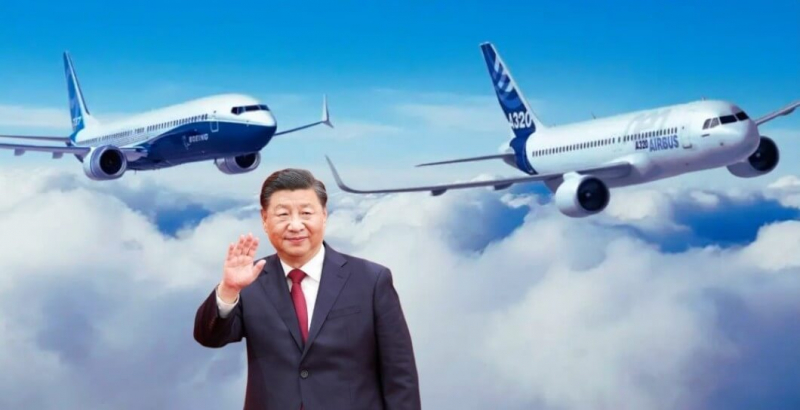
COMAC’s C919 narrow-body jet has already entered service domestically and made its first international delivery to Lao Airlines in 2025. With heavy subsidies from Beijing, COMAC is expected to target price-sensitive markets in Africa and Southeast Asia, creating a new layer of competition for the next twenty years.
Western manufacturers might dismiss what the C919 can do right now, but let’s be honest. Few people doubt that a decade of state backing and technology transfer, willing or otherwise, will close that gap faster than most in the West are comfortable admitting.
Billion-Dollar Battles Behind the Scenes
Every cockpit, every fly-by-wire system, and every radar screen represents another multi-billion-dollar fight. You have giants like Thales, Honeywell, and Collins Aerospace battling it out with an increasingly assertive Chinese ecosystem. They are fighting for contracts that can be worth hundreds of millions per program and last thirty or forty years.
A Market Too Big for Complacency
The sheer size of the prize guarantees that no incumbent can rest. We are looking at a doubling of the world commercial fleet in less than twenty years, larger aircraft, and a shift toward sustainable propulsion that is going to force another complete replacement cycle.
Airbus is ahead today, but their production struggles show that even a lead is fragile. Boeing is wounded but still holds enormous industrial and political clout at home. The engine makers are locked in a three-way technology race that will define profitability for decades. Embraer and ATR have carved out profitable niches. And COMAC, backed by virtually unlimited state resources, is no longer a curiosity. They are a strategic competitor.
In the end, only a handful of players will share that $1.5 trillion pot over the next two decades. The fight has never been fiercer, and it is only just beginning.