
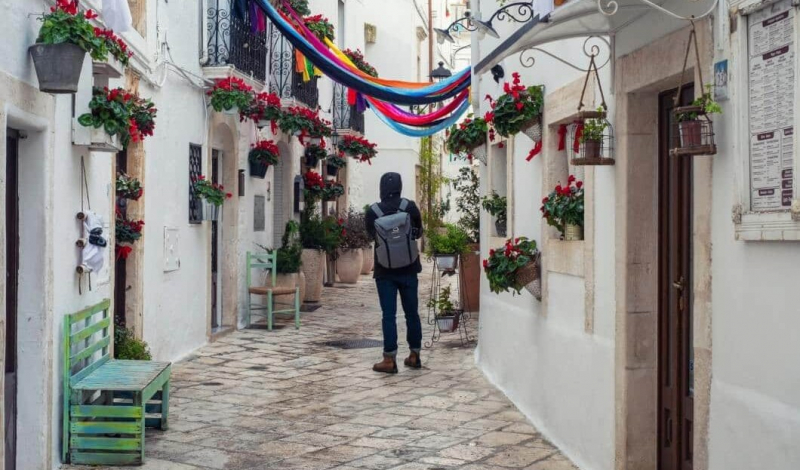
In 2024, across Italy, more than 35 million people stepped inside the country’s historic houses, visiting everything from grand palaces and villas to castles and stately homes. Even the remote inland areas saw up to 2 million visitors making the trek. But behind those impressive numbers is a quiet economic and social revolution, and it is being driven entirely by private initiative.
There are roughly 46,000 of these historic residences scattered across every region in Italy. Here is the interesting part: almost a third of them are tucked away in municipalities with fewer than 5,000 inhabitants. These are the kinds of small villages that would likely fade from memory without the gravitational pull of a local castle or Renaissance villa to bring people in. These aren’t dusty museums frozen in time, either. They are living enterprises. Sixty percent of them generate income through culture, hospitality, or agri-food production. One in five has actually evolved into a fully structured company.
The way people visit the historic houses is changing, too. The accommodation sector is the fastest-growing segment, with 35% of these houses now offering overnight stays. The number of short-term tourist rentals inside historic properties jumped 46% in just the last year, topping 3,700 facilities. It makes sense when you think about it. Visitors aren’t satisfied with a standard guided tour anymore. They want the full experience. They want to sleep in a 17th-century bedroom, wake up in halls covered in frescoes, and drink wine made right there on the estate.
Education and culture follow close behind. Fifty-eight percent of the residences regularly host school groups of all levels. In 2024, more than 20,000 properties organized at least one public event, and over 17,000 offered free or socially oriented initiatives. Eighty percent of the owners report that these events have a real, measurable impact on local development. They create essential networks connecting farmers, wine producers, restaurants, and outdoor operators.
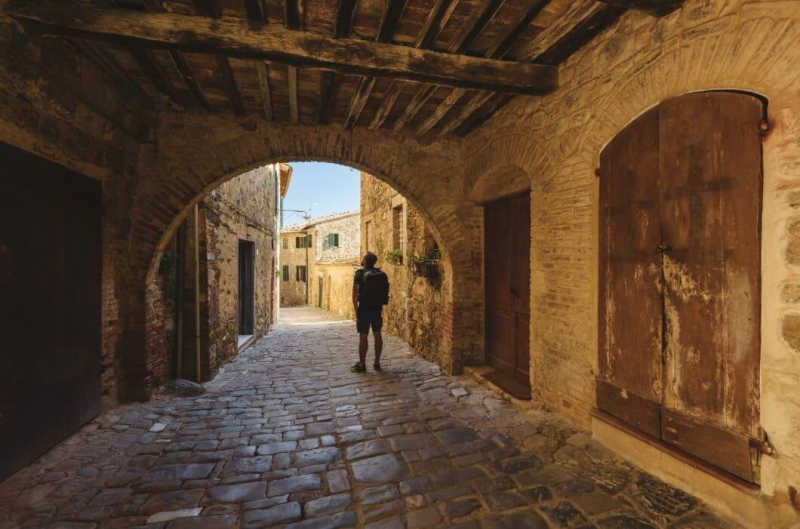
The financial effort, however, is almost entirely private. Eighty-five percent of restoration and maintenance work is self-financed, with the average owner spending more than €50,000 a year just to keep things standing. Public contributions cover a meager 2% of the interventions. In other words, Italy’s private historic heritage is being conserved almost exclusively by the families who inherited the burden, and the privilege, of owning it.

Click here to preview your posts with PRO themes ››
Agriculture remains the backbone for many estates. Seventeen percent of the historic houses are active farms, a figure that rose significantly from 2023. Viticulture dominates the landscape, with one in four cultivating grapes, rising to 36% among those who actually produce and sell wine. Cereals and olive oil each account for about 21%. For many of these agricultural estates, this isn’t a side hobby; farming generates more than 75% of their annual income.
The synergy between wine and tourism is particularly striking. Every single wine-producing historic house now offers tasting experiences. And it is working. Eighty-six percent report an increase in visitors over the past year, and in one-third of cases, that increase was more than 30%.
Taken together, these thousands of private residences inject hundreds of millions of euros into the Italian economy every year. Most of this activity happens almost entirely outside the large urban circuits and the usual tourist routes. They preserve architectural treasures that the State alone could never afford to maintain, revitalize depopulated villages, create skilled jobs, and keep alive traditions ranging from fresco restoration to ancient vine-growing techniques.
The data come from the Associazione Dimore Storiche Italiane (ADSI), the national association that represents the private heritage owners. Their message is clear. Italy’s private cultural heritage is not a nostalgic relic. It is one of the most dynamic, resilient, and genuinely sustainable sectors of the country’s economy. And it is almost entirely self-funded.
In an era when public budgets for culture are perpetually under pressure, Italy’s historic houses demonstrate that private stewardship, combined with entrepreneurial vision, can achieve what institutions often cannot. They keep the past alive while building the future, one restored fresco, one bottle of estate wine, and one overnight guest at a time.